
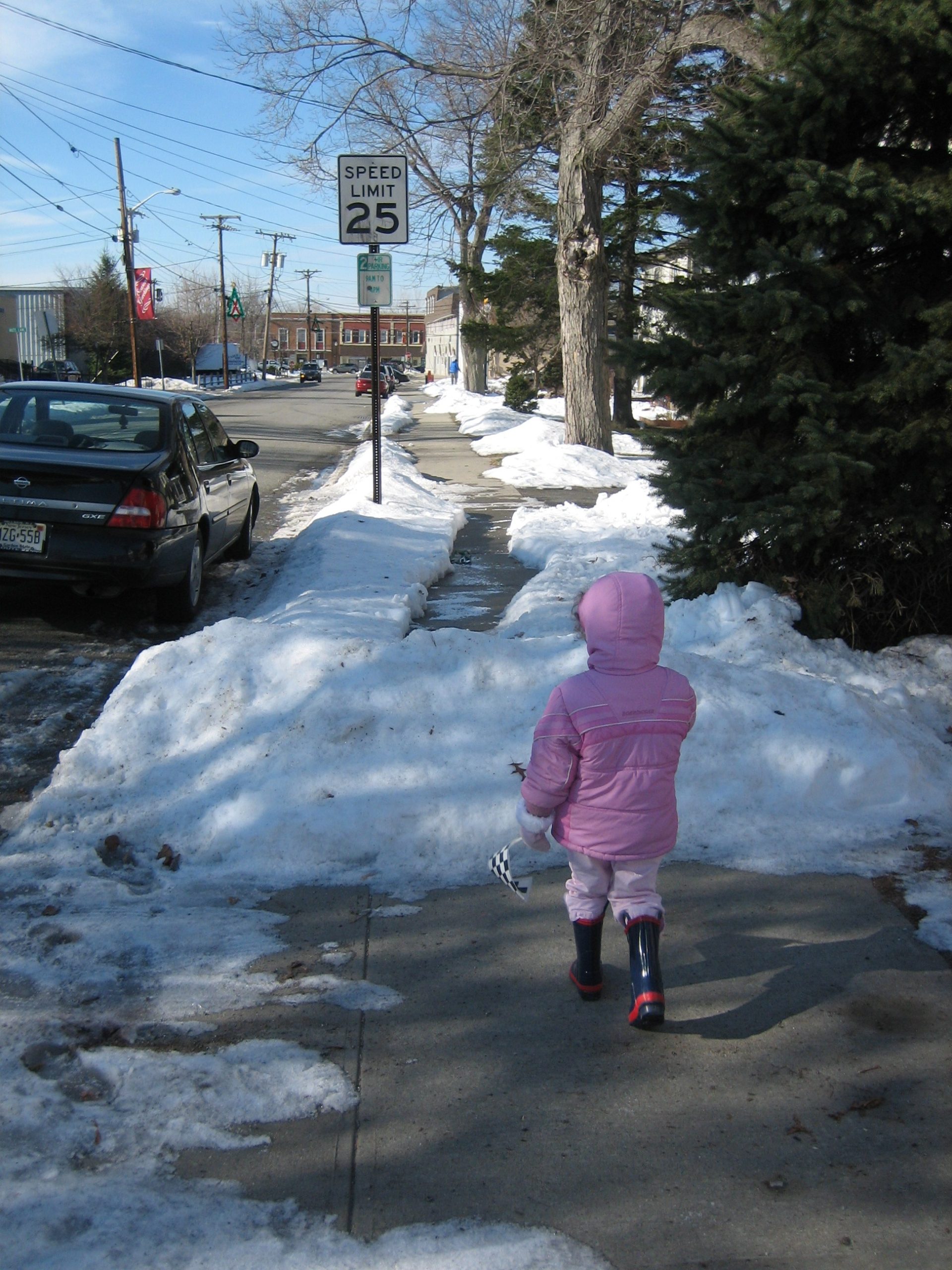
Recent winter weather in New Jersey offers a timely reminder of how essential proper sidewalk maintenance is for pedestrian safety. While snow can transform our communities into picturesque winter scenes, it can also make basic tasks, like walking down the street, difficult and dangerous. Students walking to school, crossing guards, older adults, and people with disabilities are especially vulnerable when sidewalks become impassable due to snow and ice.
Safety Concerns
One of the most significant risks posed by snowy or icy sidewalks is reduced pedestrian safety. Sidewalks that are left untreated as snow accumulates create difficult conditions for pedestrians. When walkways are left untreated, accumulated snow creates hazardous conditions for everyone, but especially limits accessibility for young children, individuals using mobility devices such as wheelchairs or walkers, and older adults, who face a heightened risk of falls. The danger does not end when the snowstorm does. Unshoveled snow often melts during the day and re-freezes overnight, creating sheets of ice that make morning travel especially treacherous. Black ice and freezing rain conditions can turn sidewalks into a nearly invisible icy landscape in a matter of minutes, creating unsafe walking conditions for pedestrians. These conditions increase the likelihood of slips and falls, highlighting the need for proactive and consistent winter maintenance.
Legal Responsibility
Many New Jersey municipalities have ordinances specifying who is responsible for clearing sidewalks after a winter weather event. Typically, property owners or occupants of homes or businesses that face a public street must clear snow or ice within 6 to 12 hours after snowfall has stopped or daylight has begun. Failure to do so can result in fines until the hazard is addressed. Municipal guidance often recommends shoveling after roadway plowing is complete to avoid snow being pushed back onto the sidewalk, helping to prevent re-accumulation and to ensure safer, clearer sidewalks for pedestrians.
Some municipalities state only that the “property owner” is responsible, which can create uncertainty among renters about their obligations. In some cases, landlords may remove snow in a timely manner, in others, landlords may make it a leasing condition that the occupant is responsible to remove snow or ice to clear the sidewalk. The same is true for business owners. This ambiguity often leads to unshoveled sidewalks, creating unsafe conditions. Clearer municipal guidelines and direct communication with residents can greatly reduce confusion and improve overall accessibility.
Residents Unable to Shovel
Older adults and individuals with disabilities may be physically unable to clear snow and ice. While some rely on family or neighbors, many do not have that support. Municipalities can address this by creating volunteer snow removal programs, potentially in partnership with local schools.
Student volunteers, such as high school or older middle school students, can help shovel sidewalks for neighbors who cannot do it themselves. These programs offer several community benefits:
- Ensuring sidewalks that would otherwise remain unshoveled are safe and accessible
- Allowing vulnerable residents to safely enter and exit their homes
- Strengthening community connections and creating a culture of mutual support
Broader Community Benefits
Having cleared, safe, and accessible sidewalks during the winter months has far-reaching benefits for the entire community. When determining whether it is safe for students to travel to school after a storm, discussions often focus on road conditions for drivers. However, many students walk—often out of necessity—and nearly everyone is a pedestrian at some point in their trip. Ensuring that sidewalk and other pedestrian infrastructure is accounted for in discussions on whether to close school due to weather conditions is vital in promoting that all students are able to safely travel to school.
Cleared sidewalks also help crossing guards perform their duties safely. Snow and ice can make it harder for them to navigate corners and curb cuts or maintain safe positioning as they assist children. In many communities, ordinances specify that property owners must clear corner curbs and curb cuts, improving safety for pedestrians and crossing guards. Clear and consistent rules can have a significant safety impact.
While winter weather can be enjoyable, it can also bring significant mobility challenges. Clearer ordinances, consistent communication, and community volunteer programs can work together to improve sidewalk accessibility and pedestrian safety. Ensuring safe, passable sidewalks during the winter benefits students, crossing guards, residents, drivers, and the community as a whole, helping to keep everyone moving safely during the winter months.
Check out our video, “Snow removal for Safer School Routes”